
Schupfnudeln are technically German potato noodles, which sounds a bit odd in theory, but they are so good! This is just one of the many German foods that I am forced to recreate as a homemade version in the United States, whereas in Germany you can buy them in the refrigerated section of the store. However, I feel lucky that I figured it out because they (I think) even better homemade!
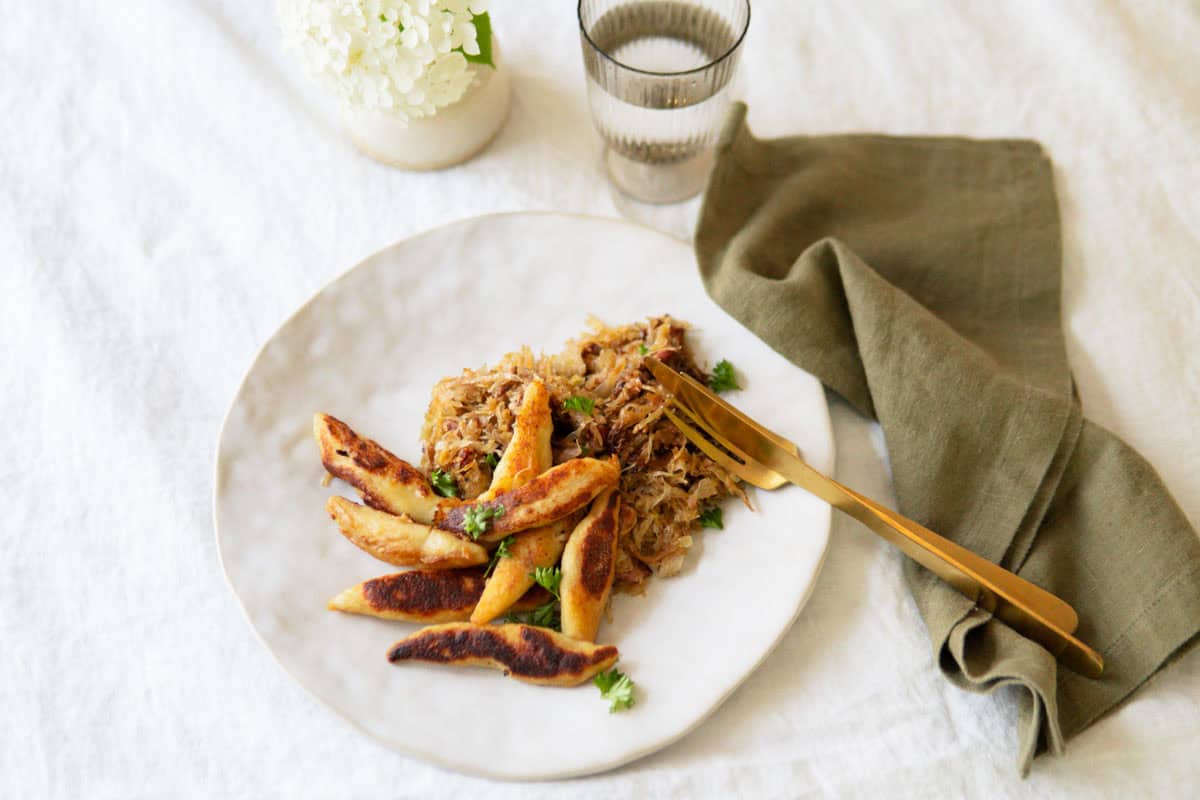
Schupfnudeln are crisp and buttery on the outside, while staying soft on the inside. I like to serve them in the savory version with sauerkraut and bacon, but you can also serve them as a sweet meal with powdered sugar and apple sauce! While they are a bit of a labor of love (you first make and then shape the potato dough into finger-length noodles, next simmer them briefly, and lastly pan-fry until golden), they are SO WORTH IT!
I’ve made Schupfnudeln many times, and this is the method I keep coming back to because it consistently delivers noodles that hold their shape, brown beautifully, and stay tender inside.
The biggest “make or break” lessons I learned over time
- getting the dough feel right (soft, not sticky)
- letting the noodles dry for a moment before frying
- boiling potatoes with the skins on for the best flavor and reduced water retention
Jump to:
- The biggest “make or break” lessons I learned over time
- Why you’ll love these Schupfnudeln
- What are Schupfnudeln?
- What makes this version special
- Ingredients you’ll need
- How to make Schupfnudeln with Sauerkraut (Quick Overview)
- Schupfnudeln Recipe (German Potato Noodles)
- How to serve Schupfnudeln
- Storage + freezing
- Expert tips
- German recipe inspiration every week
Why you’ll love these Schupfnudeln
- Crispy outside, fluffy inside!
- Big flavor, basic ingredients (potatoes are miracle workers!)
- Comfort food that tastes authentically German
- Works as a main dish or a filling side
What are Schupfnudeln?
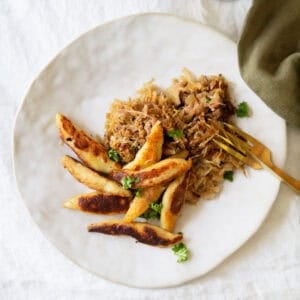
Schupfnudeln are finger-shaped German potato noodles made from mashed potatoes mixed with flour, semolina flour, egg yolk, and butter. After shaping, they’re briefly simmered in water and then pan-fried in butter until golden.
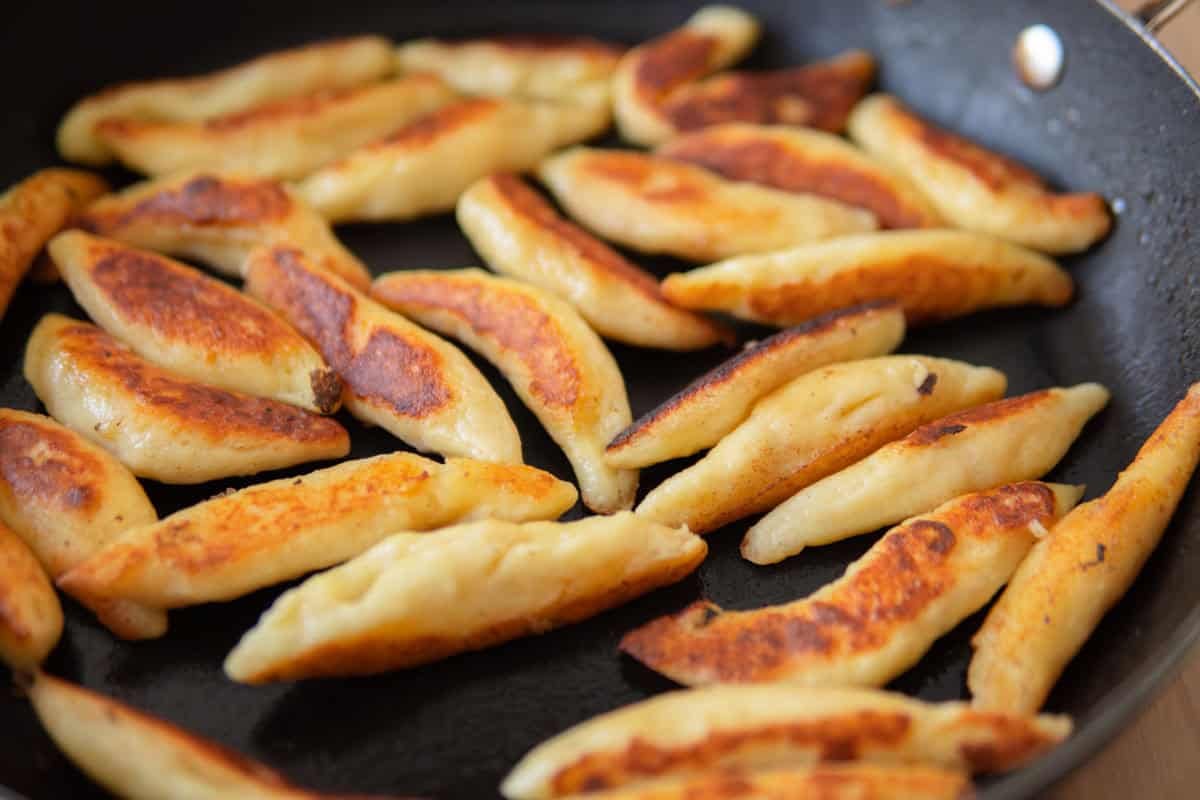
They’re commonly served either savory with sauerkraut and bacon. I also love them with this creamy mushroom sauce!) or sweet with butter and sugar (often with fruit like applesauce or fresh fruit).
What makes this version special
This is the classic German home-style approach: pan-fried until deeply golden, then combined with sauerkraut and bacon in one skillet.
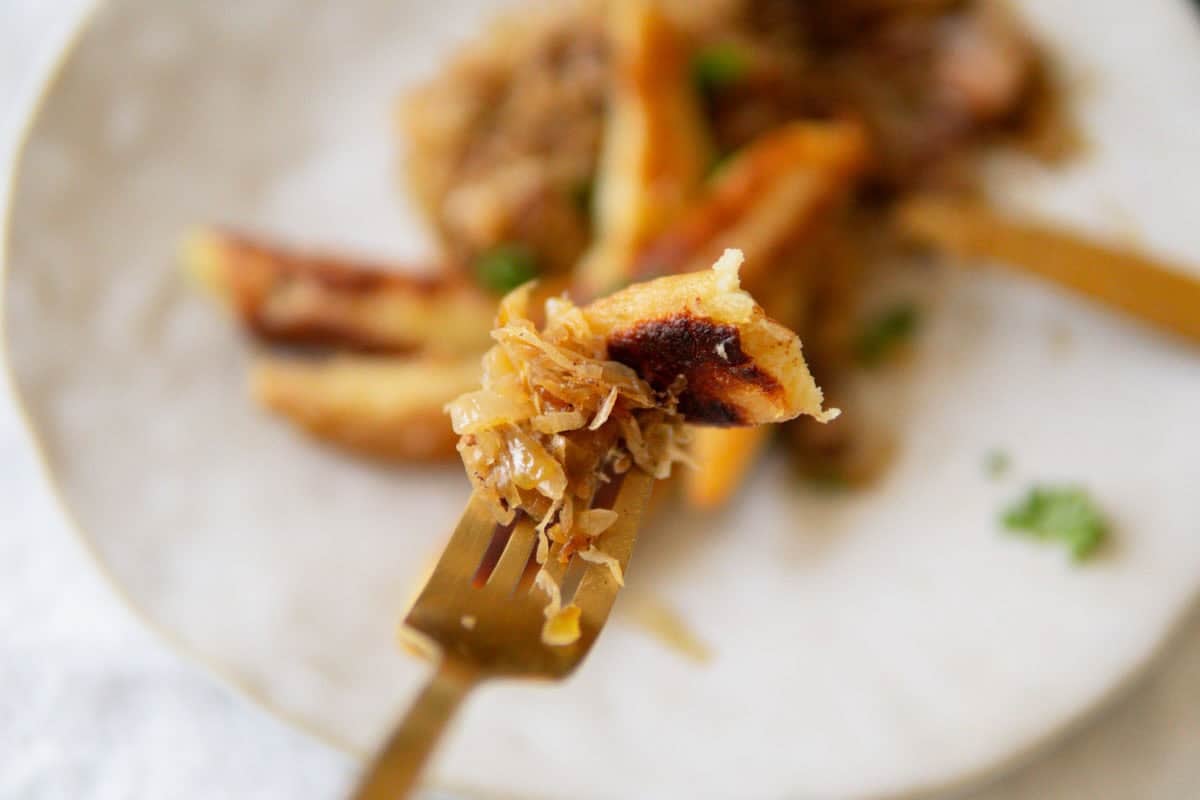
The small detail that makes a big difference is freshly grated nutmeg in the dough - a subtle, traditional touch that adds warmth and depth without making the noodles taste “spiced.”
Ingredients you’ll need
Exact measurements are in the recipe card below, but these ingredient notes will help you choose the right potatoes, flour, and sauerkraut for the best results.
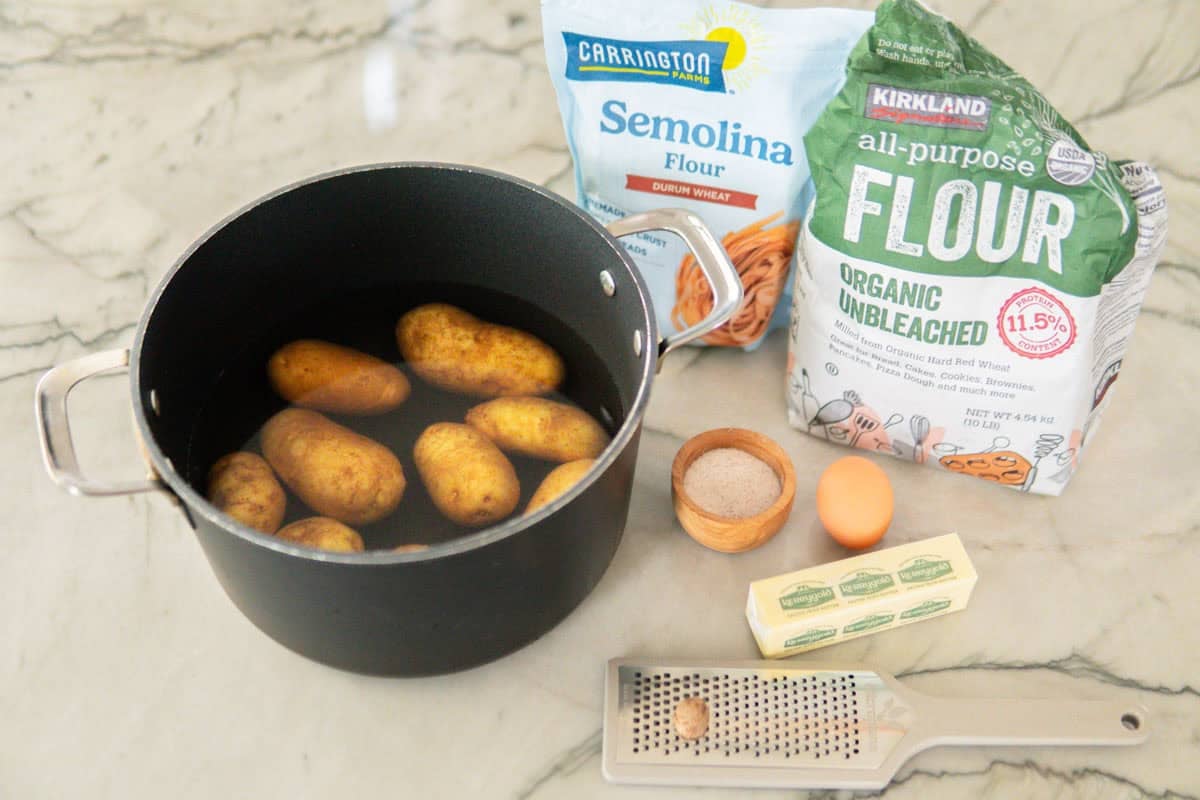
- Potatoes. Starchy potatoes (like russet) give you a fluffy mash that won’t turn gluey. Boil them with the skins on for best flavor and texture! The skins come off easily after boiling when they are still warm.
- Butter. The best flavor in the world! You will use it in the dough as well as for giving the Schupfnudeln their crispy outside in the pan.
- Egg yolk. Adding only the yolk reduces water content in the dough and helps to reduce added flour.
- All-purpose flour. The base structure for the dough.
- Semolina flour. Helps the noodles hold their shape. Potato starch or cornstarch are good substitutes here!
- Salt. It goes into the potato dough and cooking water.
- Nutmeg. Freshly grated is best (I learned from my Oma Inge). I either use this grater or a nutmeg mill.
- Bacon. Adds a smoky, savory touch.
- Onion. Because is there any better flavor than onion and bacon?
- Sauerkraut. This dish is screaming for something tart and tangy to balance it, and sauerkraut works so perfectly here! If you don't have time to make a jar of sauerkraut from scratch, choose a store-bought version that only uses cabbage and salt as ingredients. Refrigerated options are best!
- Parsley or chives. Sprinkle over the top before serving.
How to make Schupfnudeln with Sauerkraut (Quick Overview)
Let me give you a quick overview so the noodles turn out crisp and tender. Then head straight to the recipe card for the detailed step-by-step instructions.
You’ll cook and rice the potatoes, mix a soft dough, shape it into finger-length noodles, simmer just until they float, and drain well. While the noodles dry for a few minutes, you’ll crisp the bacon, soften the onion, and warm the sauerkraut. Then pan-fry the noodles in butter until golden and toss everything together.
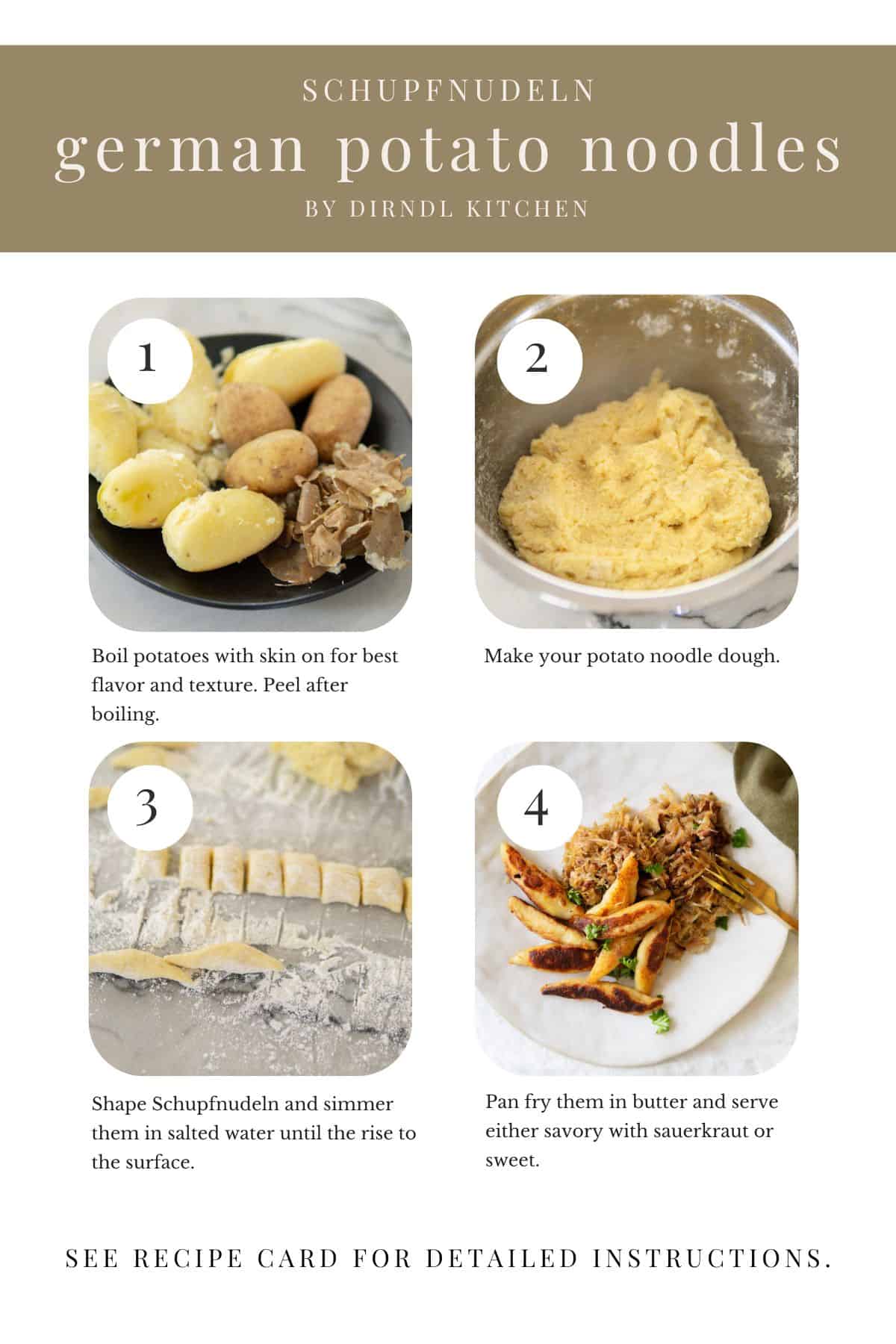
Technique cues that matter:
- The dough should feel soft but not sticky - if it clings to your hands, dust with a little more flour.
- Let boiled noodles steam-dry briefly before frying so they crisp instead of sticking to the pan.
- Fry in batches so you get real color and crisp on all sides.
Schupfnudeln Recipe (German Potato Noodles)
Equipment
- 1 Zester for grating fresh nutmeg
- 1 Potato Masher or potato ricer or spätzle press or electric mixer
Ingredients
Schupfnudeln
- 500 grams potatoes russet or other starchy potato
- 50 grams butter
- 100 grams all-purpose flour plus some more for rolling out the dough
- 50 grams semolina flour sub with regular flour or potato starch if you don't have semolina flour
- 1 egg yolk
- 1 pinch nutmeg using freshly grated nutmeg like my Oma Inge always does makes all the difference!
- ½ teaspoon salt
Sauerkraut
- 150 grams thick-cut bacon
- 1 yellow onion medium sized
- 500 grams sauerkraut I used a large jar (680 grams or 23 ounces)
- salt and pepper to taste
For Pan-Frying
- 1 tablespoon butter
- fresh parsley ot chives, optional (for garnish)
Instructions
Make the Schupfnudeln
- Boil the potatoes with the skins on, allow them to cool enough, so you're able to handle them, then peel them. Mash them, then knead with the flour, semolina flour, salt, nutmeg, butter and egg yolk until you achieve a smooth dough that's slightly sticky.500 grams potatoes, 50 grams butter, 100 grams all-purpose flour, 50 grams semolina flour, 1 egg yolk, 1 pinch nutmeg, ½ teaspoon salt
- On a generously floured surface, create two logs about 1 inch wide and cut each log into 1 inch slices. Shape each slice into finger-thick noodles with tapered ends.
- Generally salt a large pot of water and bring to a simmering boil.Carefully add the Schupfnudeln to the boiling water with the help of a skimmer (or carefully drop them in by hand). Continue simmering for about 5 minutes or until they start swimming at the surface.Carefully remove noodles with a skimmer into a sieve or strainer, allowing any excess water to drip off. Less water on the noodles means less sticking to the pan during frying.
Make Sauerkraut Skillet
- Cut the bacon into slices and medium dice the onion. Heat a skillet over medium high. Add the bacon and cook until starting to get crispy. Add the onion and cook for a few minutes until starting to brown, stirring occasionally. Add the sauerkraut (drain the brine) and cook for 10 to 15 minutes on medium low heat.150 grams thick-cut bacon, 1 yellow onion, 500 grams sauerkraut, salt and pepper
Finish Schupfnudeln
- In the meantime, heat the butter in a separate skillet and add the noodles. Do not overcrowd the pan. Cook until golden brown and crisp, turning them over once. Place the noodles on top of the sauerkraut mixture and garnish with some fresh, chopped parsley or chives.Alternatively, see notes for a sweet serving option.1 tablespoon butter, fresh parsley
Video
Notes
How to serve Schupfnudeln
Serve hot as a complete meal - this one really doesn’t need much else. But I understand that some of you may want more options, so you could serve them in these ways:- With a simple green salad
- As a side with roasted meats like my Schweinebraten (German pork loin roast) or my grilled chicken kabobs.
- Sweet version: pan-fried in butter, sprinkled with granulated or powdered sugar and served with applesauce or plum compote.
Storage + freezing
Schupfnudeln are best fresh, but leftovers keep well.- Fridge: Store in an airtight container for up to 3 days. Reheat in a skillet with a little butter to bring back the crisp edges.
- Freezer: I love making a double batch and freezing half it. Freeze Schupfnudeln after boiling once fully cooled. Pan-fry from frozen over medium heat, giving them extra time to brown.
Expert tips
- Don’t overwork the dough - mix just until it comes together.
- If the dough feels sticky, add flour a little at a time (too much makes it dense).
- Keep the simmer gentle - boiling too hard can knock them around and weaken the shape.
- If your Schupfnudeln aren’t browning, your pan is too crowded - cook them in batches.
Nutrition
Yes - shape them in advance and refrigerate until you’re ready to simmer and fry.
Schupfnudeln are typically firmer and meant to be pan-fried until golden, while gnocchi are usually softer and often served boiled with sauce.
Yes - omit it for a vegetarian version and season a bit more generously to keep the skillet flavor bold.
German recipe inspiration every week
Schupfnudeln with sauerkraut is a classic German comfort food that brings me right back to Germany. If you make this recipe and want more, subscribe to my newsletter! This way you don’t miss any of my new recipes, get a glimpse into how we celebrate German traditions in America and more.


Terri
Not too bad.I need practice on my noodles.. I would make it again
dirndlkitchen
Schupfnudeln are definitely a favorite of mine!! So glad you gave them a try!