
This easy German pork loin roast recipe is my kind of comfort food: cozy, flavorful, and easy enough to make without turning it into an all-day project. It’s a traditional-inspired German pork recipe with tender pork that starts on the cooktop, spends some time simmering in the oven in a delicious braising liquid that then finished back on the cooktop to become a silky smooth sauce. If you’re craving a classic Schweinebraten for a family meal or relaxed Sunday dinner, this is such a good one to make.
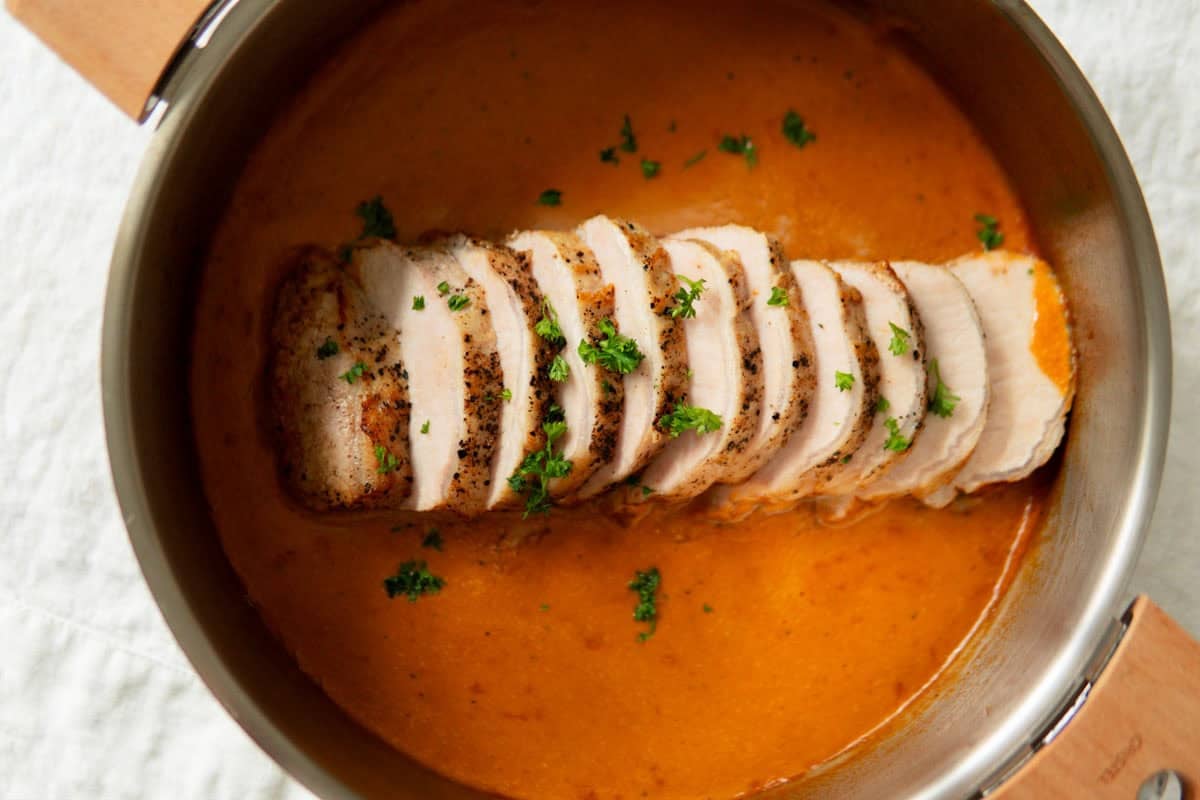
What I especially love about this recipe is that it gives you that German comfort-food feeling in a way that's doable here in the U.S. Something that tastes like out of my Oma’s kitchen, but without being fussy. This simple pork loin roast doesn’t rely on complicated techniques, and it still brings that cozy, homey feel that helps me feel closer to Germany and my family. This Schweinebraten looks impressive on the table, but is actually very simple behind the scenes - I know that you can make it, too!
Why you’ll love this easy pork loin roast recipe
This recipe is a great choice when you want a roast that feels classic, unique and comforting without needing a long ingredient list, complicated prep or a lot of time on your hands.
It also strikes a balance between simple and flavorful. Browning the meat the veggies first builds richness. The broth creates depth while the roast braises in the oven. After cooking the meat to temperature, the sauce gets a touch of cream for that perfect, smooth finish.

Because pork loin is a leaner cut, this method helps keep it tender while still giving you all the cozy flavors you want from a German pork loin roast recipe.
Ingredient notes
You’ll find the full ingredient list with exact measurements in the recipe card below, but here are a few helpful notes before you start.
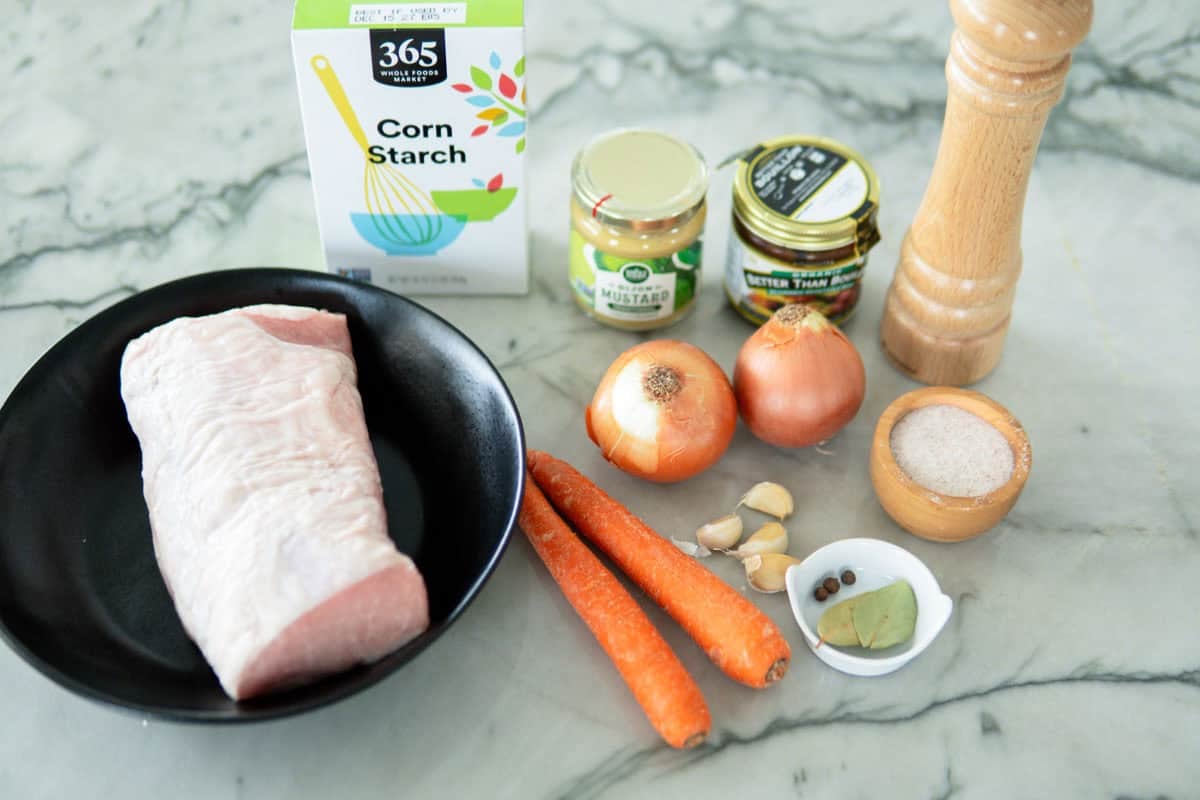
Pork loin roast is the best cut for this recipe if you want neat slices and a roast that feels a little lighter than fattier cuts. Since it is lean, it’s important not to overcook it. I like to cook my pork loin roast to 140 F (60 C) in the oven as it will continue to cook after it gets removed from the oven to rest and before slicing it. If your oven does not have a built-in probe, I highly recommend using an instant-read thermometer. Insert the probe to the thickest part of the meat, which would be the middle for this pork roast.
Onions, carrots, and garlic are not meant to be served as a chunky vegetable side here. Instead, they act as the flavor base for the braising liquid and help create a more layered sauce.
Tomato paste does not make the sauce taste tomato-y. It simply adds depth and helps round out the savory flavor.
Bay leaves and whole allspice give this roast that subtle old-fashioned German flavor. The allspice especially adds warmth without turning the dish sweet.
Dijon mustard brings balance and a gentle sharpness to the sauce. It helps wake up all of the richer flavors without overpowering them.
Heavy cream makes the final sauce smoother and more luxurious. It softens the stronger savory notes and gives the gravy a more finished feel.
A few helpful tips before you start
Brown the roast properly before it goes into the oven. You are not cooking it through at this stage, but that golden color adds a lot of flavor to both the meat and the sauce.
Keep the vegetables fairly rough-cut. Since they are only there to flavor the braising liquid, there is no need to spend time making them look pretty.
If you have a meat thermometer, this is the easiest way to keep pork loin from drying out. Pulling it from the oven before it goes too far helps you get slices that stay juicy.
Let the roast rest before slicing so the juices can redistribute. During that time, you can finish the sauce and get everything else onto the table.
For the smoothest sauce, strain the braising liquid well before simmering it down with the mustard and cream.

Easy German Pork Loin Roast Recipe
Equipment
- Large Dutch oven Or oven-safe deep pan. If you don’t have an oven-safe pan, use a casserole dish for the oven braising.
- meat thermometer optional
Ingredients
- 30 grams butter
- 30 milliliters avocado oil
- 1 kilogram pork loin roast
- 2 onions
- 2 carrots
- 2 garlic cloves
- 1 tablespoon tomato paste
- 2 bay leaves
- 3 whole allspice
- 800 milliliters veggie broth
- 2 teaspoons Dijon mustard
- 120 milliliters heavy whipping cream
- 1 teaspoon cornstarch optional, for thickening
- 1 teaspoon salt
- 1 teaspoon black pepper
Instructions
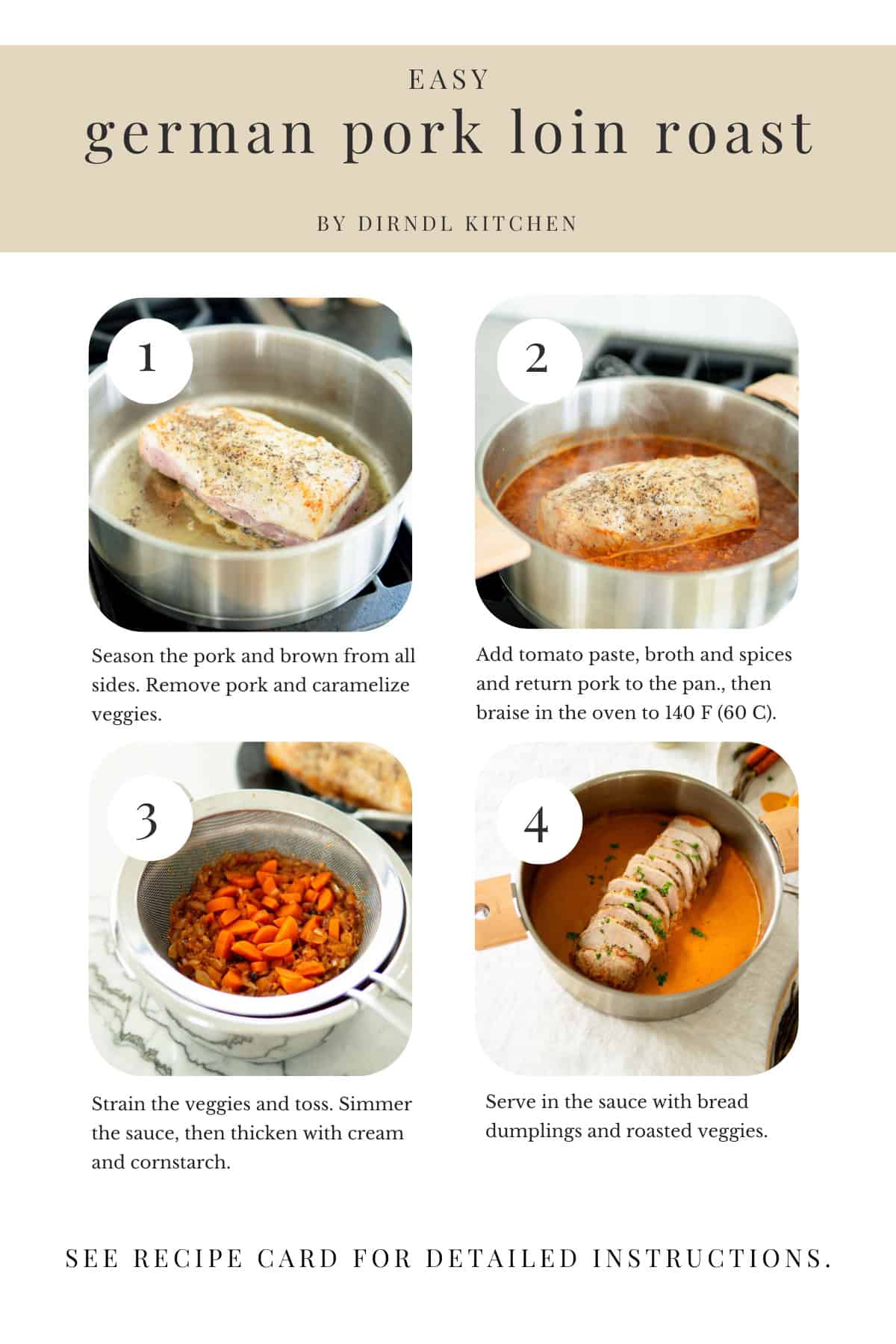
Brown the pork
- Preheat the oven to 300°F (150℃) on the conventional setting.
- Season the pork roast all over with the salt and pepper.
- Heat the butter and avocado oil in a large Dutch oven or deep oven-safe pan over medium-low heat and brown the pork on all sides until golden. This should take about 8 to 10 minutes total.
Build the braising base
- While the pork browns, roughly chop the onions and carrots and peel the garlic cloves.
- Remove the pork from the pan. Add the onions and carrots to the pan and cook until they begin to caramelize, about 10 minutes.
- Stir in the garlic and tomato paste and cook for 1 minute.
Braise the roast
- Pour in the broth and add the bay leaves and whole allspice.
- Bring everything to a boil.
- Return the pork to the pan with the fatty side facing up.
- Transfer to the oven and cook until the internal temperature reaches 140°F / 60°C, about 30 minutes.
- Remove the roast from the pan and let it rest on a plate for 10 minutes.
Make the sauce
- Strain the braising liquid through a fine mesh sieve and discard the vegetables and spices.
- Return the strained liquid to the pan. Stir in the Dijon mustard and simmer over medium-high heat for about 10 minutes to reduce slightly.
- Add the cream and season to taste with additional salt and pepper if needed.
- If you want a thicker sauce, whisk the cornstarch with a small amount of cold water first, then stir it into the sauce and simmer briefly until thickened.
Slice and serve
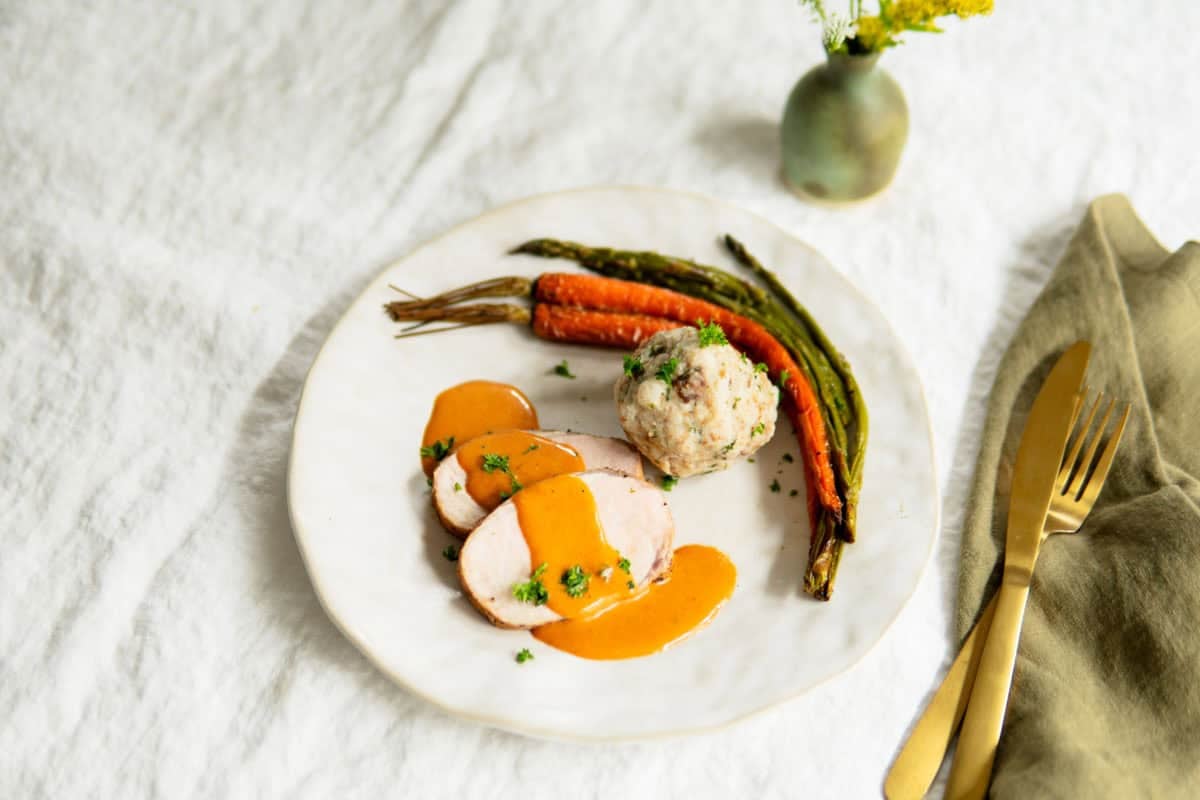
- Slice the rested pork and place back into the pan with the sauce. Serve with the sauce spooned over the top, German bread dumplings (Semmelknödel) and oven-roasted veggies.
Notes
- Pulling the pork at 140°F (60°C) allows for carryover cooking while it rests.
- A final temperature around 145°F (63°C) gives you pork that stays juicy and may still have a very light blush in the center.
- The vegetables are used to build flavor for the sauce, not as the final side dish.
- This roast is especially good with bread dumplings, potato dumplings, boiled potatoes, spätzle and roasted veggies or rotkohl (German braised red cabbage) However, for a more American twist, sub boiled egg noodles or mashed potatoes for the starch.
How to store it
Store leftover pork and sauce in an airtight container in the refrigerator for up to 3 days. To reheat, place the slices and sauce gently in a covered pan over low heat until warmed through. Try not to boil the sauce hard or overcook the pork during reheating, since pork loin can dry out more quickly than fattier cuts. You can also freeze leftovers, ideally with some extra sauce to help protect the meat. Thaw in the refrigerator overnight before reheating.Nutrition
No. Pork shoulder is fattier and more forgiving, while pork loin is leaner and slices more neatly. This recipe is designed specifically to help pork loin stay tender.
Yes. Pork does not need to be cooked until completely white and dry. A properly cooked pork loin can still have a faint blush in the center and taste much juicier.
This roast pairs especially well with potato dumplings, bread dumplings, boiled potatoes, mashed potatoes, spaetzle, red cabbage, green beans, or a simple cucumber salad.
Yes. You can make it earlier in the day and reheat it gently with the sauce before serving. The flavor is often even better once everything has had a little time to sit.
More German dinner recipes you will love
If you love this easy pork loin roast recipe, you will likely also love my bacon-wrapped pork tenderloin, German cabbage Rouladen, Frikadellen, German pork goulash, and my red cabbage recipes for the same cozy feel.




Sophie Sadler
I hope you love this German pork loin recipe as much as we do and try it soon! 🙂