
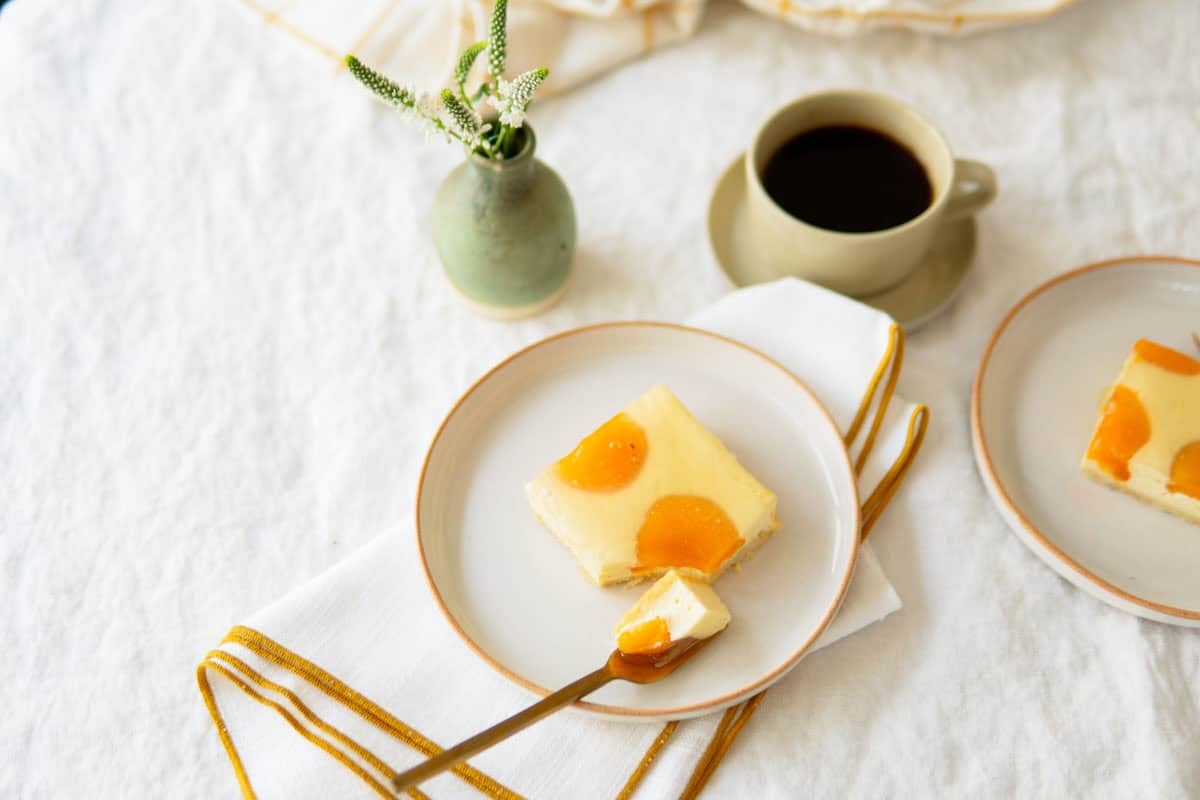
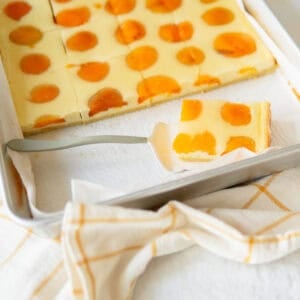
This German apricot cheesecake is the kind of bakery-style cake that makes me so excited for Kaffee und Kuchen! It has a buttery, soft cookie-like base that gets par-baked first, then topped with a creamy lemon cheesecake layer (no quark needed!) and rows of golden apricot halves, which look like sunny side up eggs (hence the German alternative name for this cake, which is Spiegeleikuchen). The cake is then finished with a glossy apricot glaze. The flavor is fresh, lightly tangy, fruity, and not overly sweet, which is exactly what I love about German cakes. It’s basically a German cheesecake with apricots, but baked as a sheet cake, making it perfect for sharing.
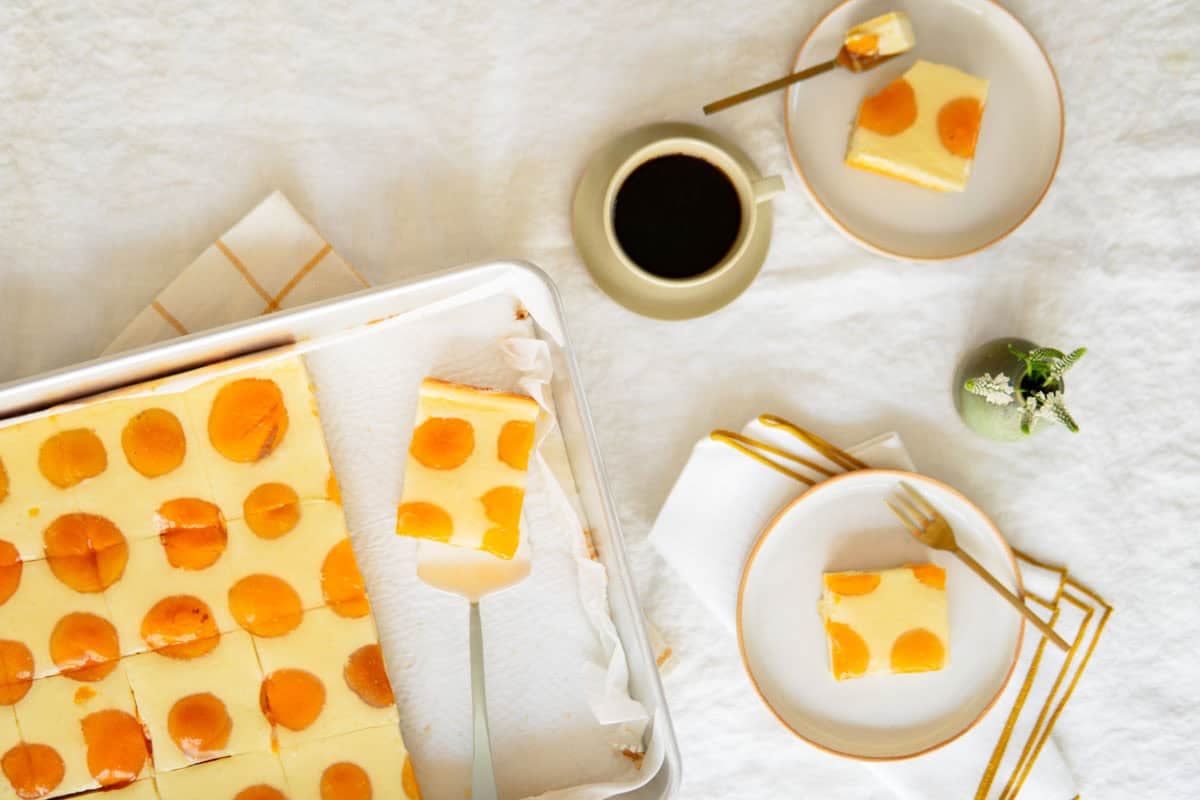
This is the kind of cake I grew up seeing in German bakeries, especially during the warmer months when fruit-topped cakes suddenly take over the display case. I love that it looks so polished and special, but the method is actually very doable. The bottom dough comes together in a stand mixer, the filling is blended until smooth, and the canned apricots make this cake easy to make year-round, even when fresh apricots are not in season.
Jump to:
Why you’ll love this German apricot cake
This cake has that classic German bakery feel with four simple but beautiful layers: a buttery base, a creamy cheesecake filling, fruit on top and a super simple glaze.
It’s also a great cake for serving a crowd because it’s baked in a sheet pan and slices neatly once cooled. I especially love it for Easter, Mother’s Day, summer birthdays, or a relaxed Sunday afternoon with cake and coffee.
And because the apricots come from cans, this is one of those cakes you can make any time of year without waiting for perfect fresh fruit.
And the best part: you don’t need quark to make this German cheesecake! I am using a mixture of sour cream and cream cheese instead and adjusted the rest of the recipe to give it the texture and taste of a German cheesecake!
I first ate a similar cake at my uncle Axel's house a couple of summers ago, the reel I posted about that cake went viral (yes, the cake that I didn’t bake!), so I had to finally recreate the recipe for you!
Ingredient notes
You’ll find the full ingredient list with exact measurements in the recipe card below, but here are a few helpful notes before you start.
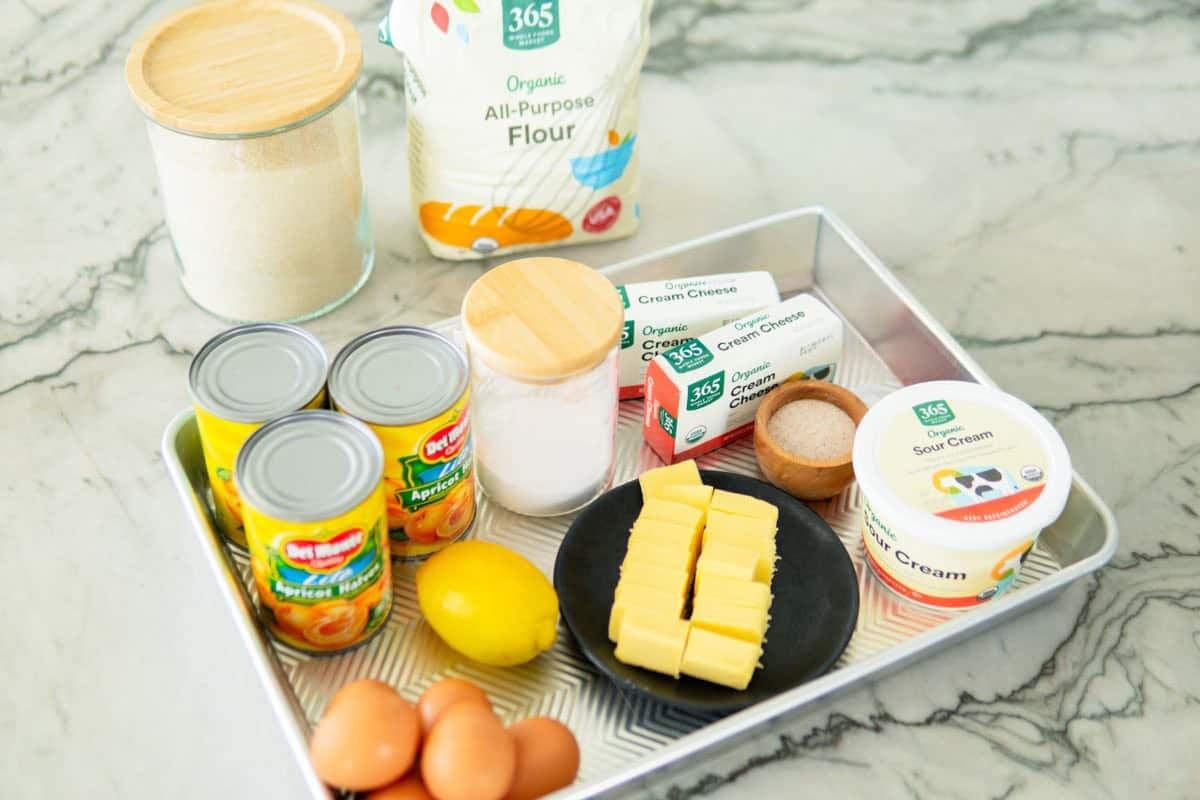
Apricots are the star of this cake. Canned apricot halves (in light syrup) work beautifully here because they are soft, sweet, and easy to arrange in neat rows. Make sure to reserve the juice/syrup for the glaze!
Cream cheese and sour cream create the creamy cheesecake layer. The combination (and adjustment of other ingredients in this recipe) makes the filling taste authentically German. That means it’s slightly tangy, creamy yet crumbly (yes, both can co-exist), without feeling too heavy. The cream cheese and sour cream combo actually makes a really great substitute for quark in this cheesecake, and I think you will agree!
Lemon zest and juice brighten up the filling and balance the sweetness of the apricots.
Cornstarch helps the cheesecake layer set, while potato starch thickens the apricot glaze on top with a clear finish (cornstarch tends to make the glaze more cloudy). You could use potato starch for the entire cake.
The bottom dough is more like a soft German Mürbeteig-style base than a fluffy cake batter. It gives the cake a buttery foundation that holds up well under the creamy filling.
A Few Helpful Tips Before You Start
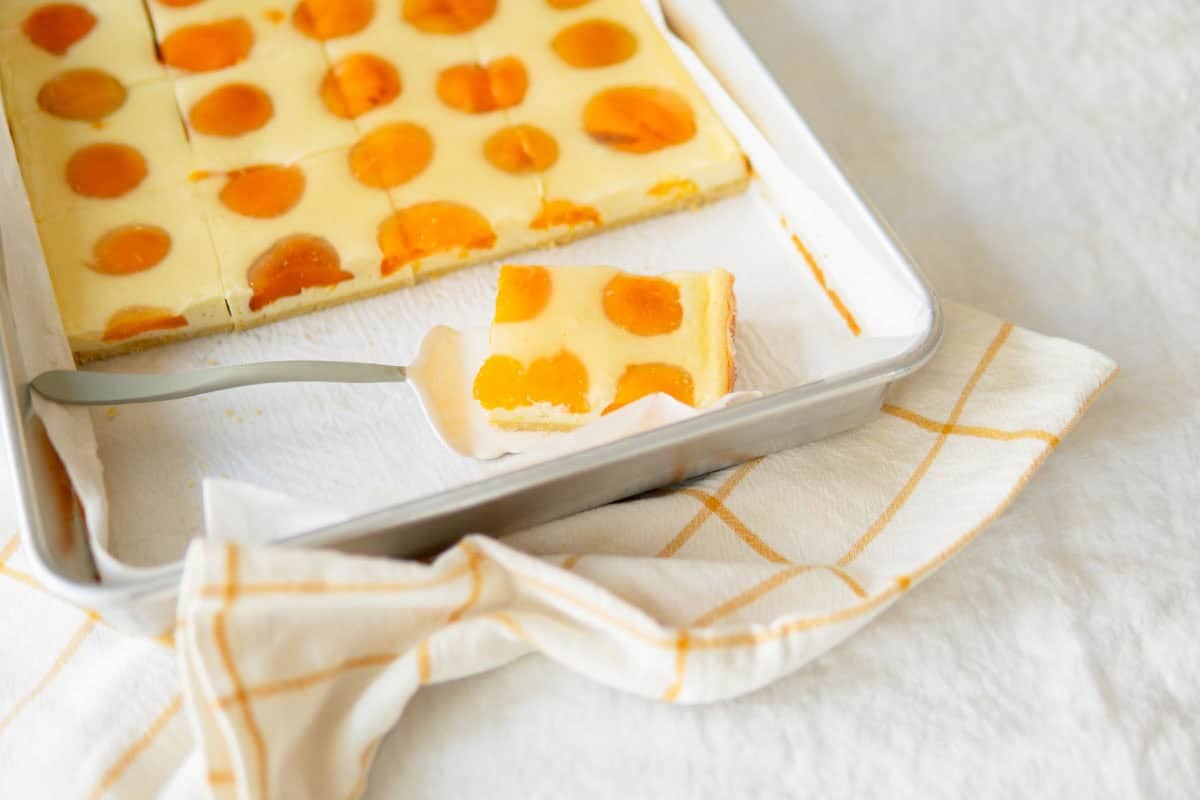
For the neatest slices, make sure the cake has time to cool after adding the glaze. The cheesecake layer and glaze both need about 2 hours to set up.
There is no need to press the dough up the sides of the pan. Just cover the bottom evenly, then poke it with a fork before par-baking.
When arranging the apricots, place them rounded side up in rows. This gives the cake that pretty, classic German bakery look. If you like more apricots on your cake, use up a 4th can.
If your reserved apricot juice does not measure 300 milliliters (it should), simply add enough water to reach the full amount.
German Cheesecake with Apricots Recipe
Equipment
- 1 Stand Mixer with paddle and whisk attachments
- 1 Cake Pan (13x18-inch / 33x46 cm) Linking the exact one I used here.
- 1 Parchment Paper For lining the cake pan
- 1 Mini Whisk I love this little guy for whisking together small amounts starch with water like you will for the glaze.
- 1 small rolling pin It's useful for rolling out the dough inside the cake pan. You can also use your hands to press it into shape.
Ingredients
Bottom Layer Dough
- 170 grams butter room temperature
- 100 grams sugar
- 2 eggs size US large
- 1 teaspoon vanilla extract
- 350 grams all-purpose flour
- ¼ teaspoon baking powder
- 1 pinch salt
Cheesecake Layer
- 500 grams cream cheese full-fat
- 170 grams sugar
- 4 eggs size US large
- 500 grams sour cream full-fat
- 40 grams cornstarch
- 1 lemon organic, zest and juice
Apricot Layer
- 1275 grams apricots total net weight, reserve juice for glaze
Apricot Glaze
- 300 milliliters reserved apricot juice supplement with water if needed
- 12 grams potato starch
Instructions
Make the Bottom Layer Dough
- Preheat the oven to 350℉ (180℃) on the conventional setting (not convection).
- Using the bowl of your stand mixer and a paddle attachment, cream together the sugar and the butter for one minute. Add the eggs and vanilla extract and beat until combined. Add the flour, baking powder, and salt and mix on low speed until smooth, about 5 minutes.
- Cover the dough and refrigerate it while the oven preheats.
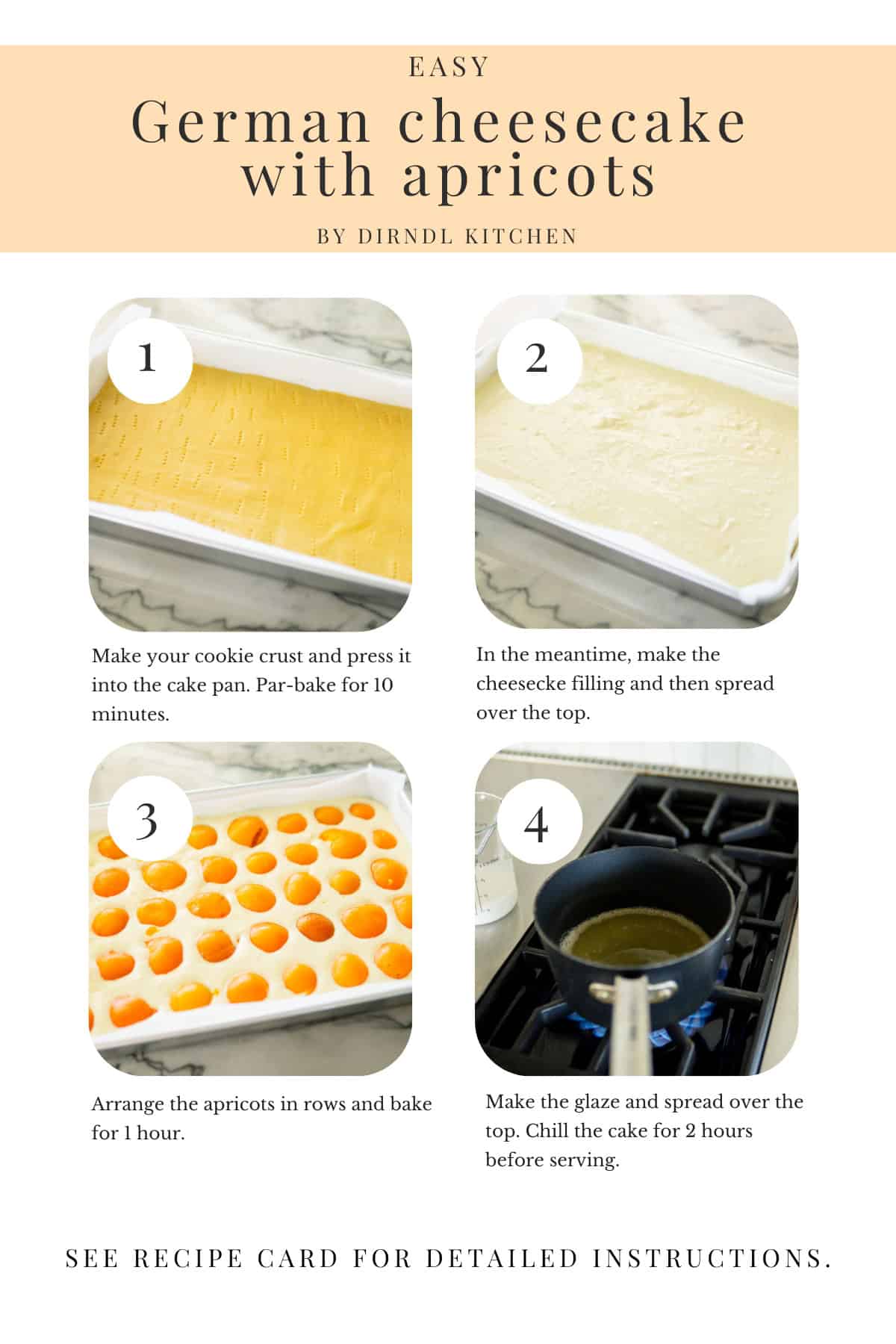
- Line your cake pan with parchment paper. Divide the dough into 4 portions and place one portion into each corner of the prepared pan. Press or roll the dough evenly across the bottom of the pan. There is no need to press the dough up the sides of the pan. Poke the dough all over with a fork.
- Par-bake for 10 minutes, then remove from the oven for the next step.
Make the Cheesecake Layer
- In the meantime, make the cheesecake layer. Add the cream cheese and sugar to the bowl of a stand mixer fitted with the whisk attachment. Mix on medium speed until creamy, about 2 minutes.
- Scrape down the sides of the bowl with a rubber spatula. Add the eggs, sour cream, cornstarch, lemon zest, and lemon juice. Mix on medium speed until smooth, about 1 minute.
- Pour the cheesecake filling over the par-baked crust and spread it out evenly using a rubber spatula.
- Drain the apricots, reserving the juice for the glaze. Arrange the apricot halves rounded side up on top of the cheesecake filling in neat rows.
- Bake the cake for a total of 1 hour. Cover the cake with aluminum foil for the last 30 minutes of baking to prevent the top from browning too much.
Make the Apricot Glaze
- As soon as the cake is out of the oven, make the glaze. Measure the reserved apricot juice. If you do not have 300 milliliters (10 ounces) total, add enough water to reach 300 milliliters (10 ounces).
- Whisk 100 milliliters (3 ounces) of the juice with the potato starch until smooth.
- Bring the remaining juice to a boil in a small saucepan. Whisk in the potato starch mixture and bring it back to a boil. Boil while whisking for 30 seconds, or until thickened and glossy.
- Pour the glaze over the baked cake and spread it out evenly with a rubber spatula.
- Allow the cake to chill for at least 2 hours before slicing into 24 pieces (6 rows of 4 slices each) and serving.
Video
Notes
- If the dough feels sticky, lightly dampen your hands with water or use a small rolling pin to help spread it.
- Let the cake cool before slicing so the cheesecake layer and glaze can set. Otherwise the glaze may end up having a slimy consistency. And believe me, that is not sexy.
- It's best to use potato starch for the glaze, as it has a clearer consistency when cooked. If you're in a pinch and can't find it, cornstarch works well, but will give you a cloudier look.
- Store leftover German apricot cake covered in the refrigerator for up to 5 days. Because of the cheesecake layer, this cake should stay chilled when not being served. You can also freeze slices for up to 3 months. For best results, freeze the slices in an airtight container with parchment paper between layers. Thaw in the refrigerator before serving.
Nutrition
Yes! This is a great cake to make ahead because it needs time to cool and set. You can bake it the day before serving and store it in the refrigerator overnight.
You can use fresh apricots when they are ripe and flavorful, but canned apricots are the easiest and most reliable choice for this cake. They are already soft, sweet, and come with juice for the glaze.
If using fresh apricots, you will need apricot juice or another light-colored fruit juice for the glaze.
More German Cake Recipes You Will Love
If you love this German apricot cake, you may also love my German plum cake (with cheesecake layer - this one does use quark and you can find a recipe for quark in my cookbook). You'd likely also love my German yogurt cake with berries, German raspberry cake, and my easy German apple cake.


Maple
Can I make this with mangoes and othet canned fruit?
What about fresh rhubarb?
Sophie Sadler
Hi Maple! You can totally switch up the fruit! Mangoes would work so well and rhubarb would too! Fresh or frozen cherries, plums, apples, blueberries, blackberries or raspberries are also popular in Germany. For the glaze (if not using canned fruit), I would use any kind of bottled fruit juice that would be a good companion for the fruit you're using on the cake. For a clear glaze, filtered apple juice is my go to. If using frozen fruit, you may need to add a little baking time. I hope this helps!
Sophie Sadler
You can definitely change out the fruit in this recipe! Common fruit to use in Germany would be stone fruit such as plums and cherries, but rhubarb should work beautifully as well. If using rhubarb, I would recommend using filtered apple juice for making the glaze.