
Recreating German food at home involves simple ingredients and learning some techniques. While you don't need a lot of different kitchen tools, as a German expat and German cookbook author, there are some I really would not want to live without.
Whether you’re in the mood for the making a batch of my popular German pretzels or pan-frying a batch of pork schnitzels with creamy mushroom sauce, the right equipment can make everything a bit more straight forward and less frustrating.
And here's a fun fact: while I own two stand mixers that I have proudly adopted over the many years of baking German recipes, I don't even own a deep fryer (you can do without one, too).
The list below are really my 21 most-used tools in German cooking and baking. I will let you know why they make life easier, when I reach for them, and what you can absolutely use instead if your kitchen isn’t stocked like a German Oma’s kitchen (yet).
Jump to:
Baking essentials
If you know just a bit about Germans, you'll know that most Germans have the baker gene in them. It shows when it's time to bring a homemade marble cake to work for your birthday (a must!) or going crazy with baking a bunch of German cookies for Christmas (the only time of year Germans bake cookies!).
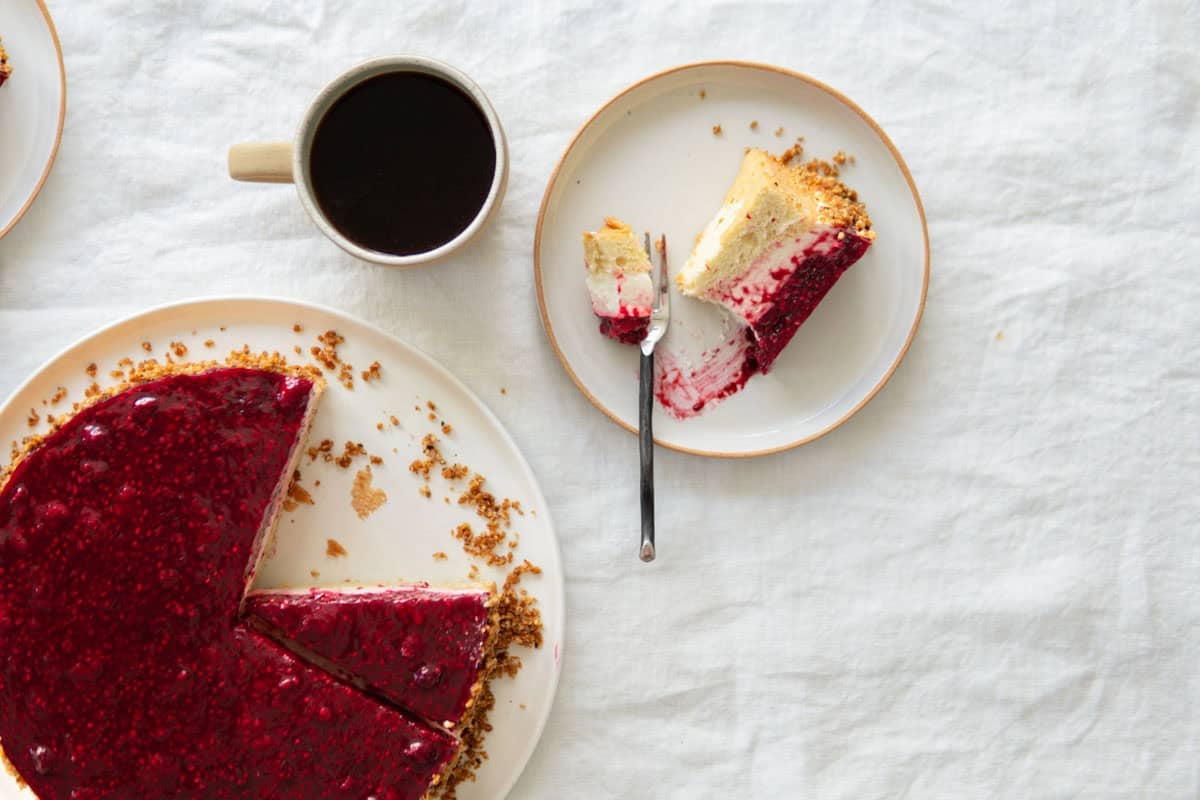
From my favorite nussecken to my famous pretzels and the most iconic franzbrötchen, German pastries are simply unmatched. Whether you're an experienced baker or just starting out, let's chat about my favorite baking tools first.
Here are my go-to baking tools you’ll reach for again and again. Plus what to use if you don’t have them just yet:
- Kitchen scales are non-negotiable in German baking, where precision matters. That's why I had to start the list with this one. You’ll want one for stollen or baking my go-to loaf of German rye sourdough. You can use cups, but it’s not ideal if you want consistent, dependable results. This is my go-to kitchen scale as it's sleek, modern, easy to clean and rechargeable!
- Stand mixers are the dream tool for kneading dough and whipping up batters without lifting a finger. Perfect for stollen and German bread recipes, for which you will knead dough for up to 10 minutes at a time. If you don’t have one, a hand mixer (get one with dough hooks for handling bread dough) can usually handle the job. Or go classic with getting a workout in by using your hands.
- A food processor is that tool that I resisted for so long and now use all the time! Whether it's for grinding nuts for homemade nussecken or krokant (caramelized nut topping) or making parsley oil for garnishing your leek and potato soup, it's a must on my list of German tools to have at home.

- Parchment paper is a must for baking anything sticky or delicate, like nussecken, vanillekipferl, or plunderteig. If you’re out, you can grease and flour your pan or use a silicone baking mat instead.
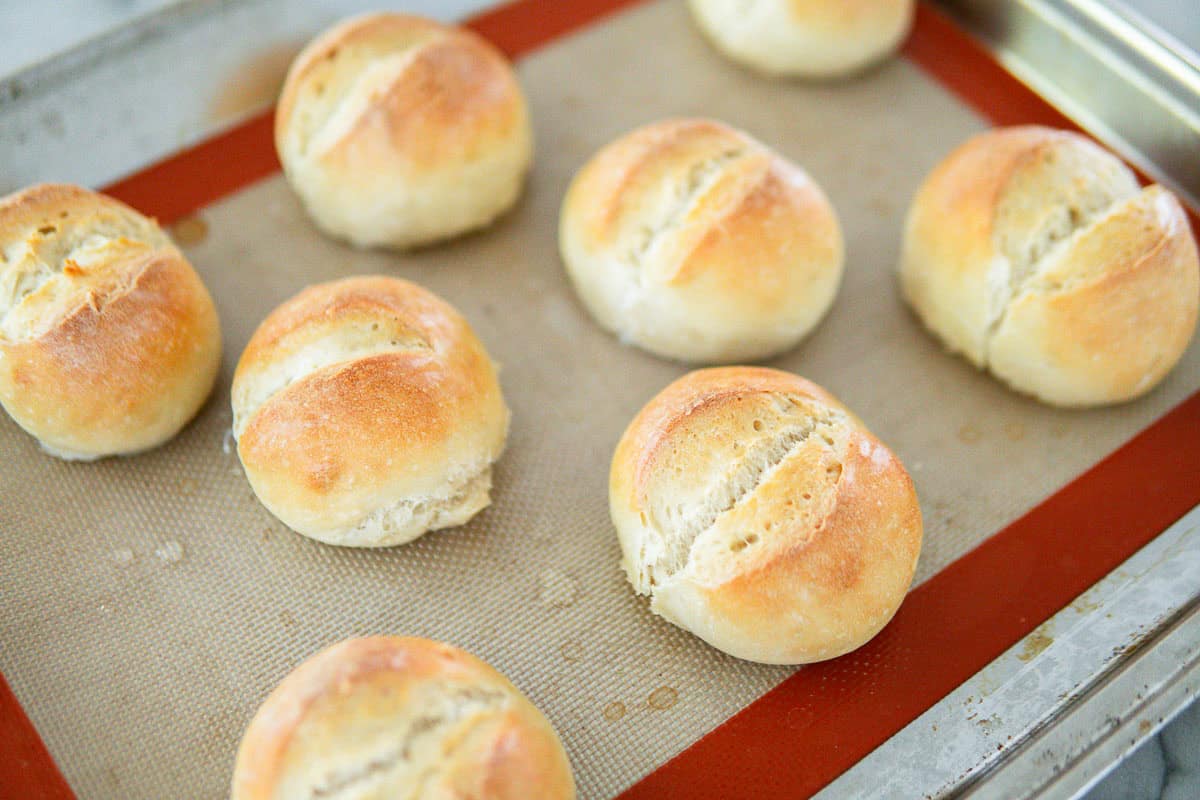
- Silicone baking mats are a reusable, eco-friendly alternative to parchment paper. It's great for anything buttery or delicate and a MUST for making pretzels, so that they don't stick. Make sure that you don't use them for baking over 450 degrees Fahrenheit or 250 degrees Celsius.
- Pastry brushes bring all the golden, glossy finishes to life, like the jam layer in nussecken or the glaze on bratapfel teilchen. In a pinch, you can gently spread with the back of a spoon.
- Rolling pins are essential for doughs that need to be rolled evenly, like apfelstrudel or laminated plunderteig. No rolling pin? A straight-bodied wine bottle will do the job (just wash it first).
- Rubber spatulas help scrape every last bit of batter or filling from your bowl- essential for frosting-heavy bakes. I also love them for getting the last bits out of sour cream and yogurt jars. It's so satisfying. There really isn't a great substitute for them, but luckily they are pretty inexpensive.
- These mixing bowls are my absolute favorites and staples for every stage: mixing, proofing, tossing, and chilling. You’ll use them for plunderteig, obatzda, and everything in between. The bowls are made from high-quality heavy steel and have a non-slip silicone bottom. I also use these reusable silicone bowl covers on the daily for anything from food prep to baking.
- Powdered sugar dispensers give your desserts a pro-level finish. Having one on hand is ideal for recipes like Linzer Cookies (spitzbuben). If you're stuck without one, a small strainer works, but the shaker definitely is the kids favorite way to add 'snow' onto homemade waffles.
Even if your kitchen isn’t fully stocked yet, don’t stress. Use what you’ve got and upgrade slowly.
For bread lovers
German bread culture is essential to German life. I mean which other country has a whole meal named after bread aka Abendbrot. The perfect German bread is crusty, seedy and soft-on-the-inside. If you’re making Brötchen, pretzels, or anything sourdough-adjacent, these tools help you work smarter.
- Dough tools like scrapers and cutters help portion and shape dough without tearing it. They come in handy for pretzels and müsli brötchen. If you don’t have a dough cutter, a bench scraper or pizza cutter works in a pinch.
- For perfectly thin or thick slices every single time, you may want to invest in this bread slicer. I really think it upped my game when it came to baking bread because it turned my bread into perfectly sandwich-ready slices that were never too thick. And it reminded me of home because in Germany, every family owns a bread slicer. I love this manual bread slicer that's always action-ready and made in Germany. If you don't feel ready to invest in a slicer, a good bread knife will do the trick.
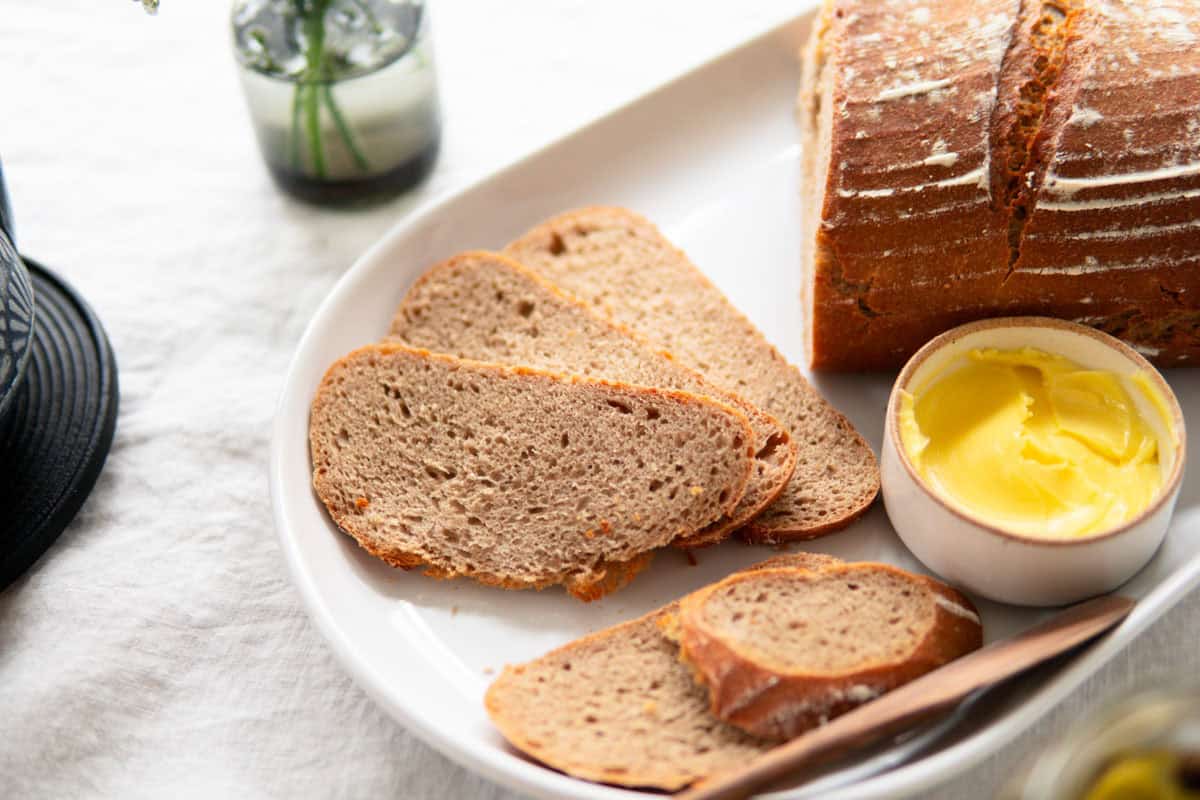
- After baking your bread, keep it in this pretty metal bread box like the one I have. Yes, this one's another one of those items that every German has at home. It helps it stay fresh for longer. We keep ours in our pantry. Alternatively, wrap it in a clean cotton kitchen towel and get this pretty linen bread bag and bowl cover set.
- A bread lâme is a commonly used tool for scoring bread before baking, but isn't totally necessary. A sharp paring knife is one of my favorite, most versatile knives, and great for scoring bread or prepping apples for something like these delicious Bratapfel Teilchen.
- This has been my go-to kitchen knife for prepping veggies for the last 10 years. The hollow areas along the blade of the knife allow it to glide easily through wet ingredients (like onions and fruit).
For sauces, soups & sides
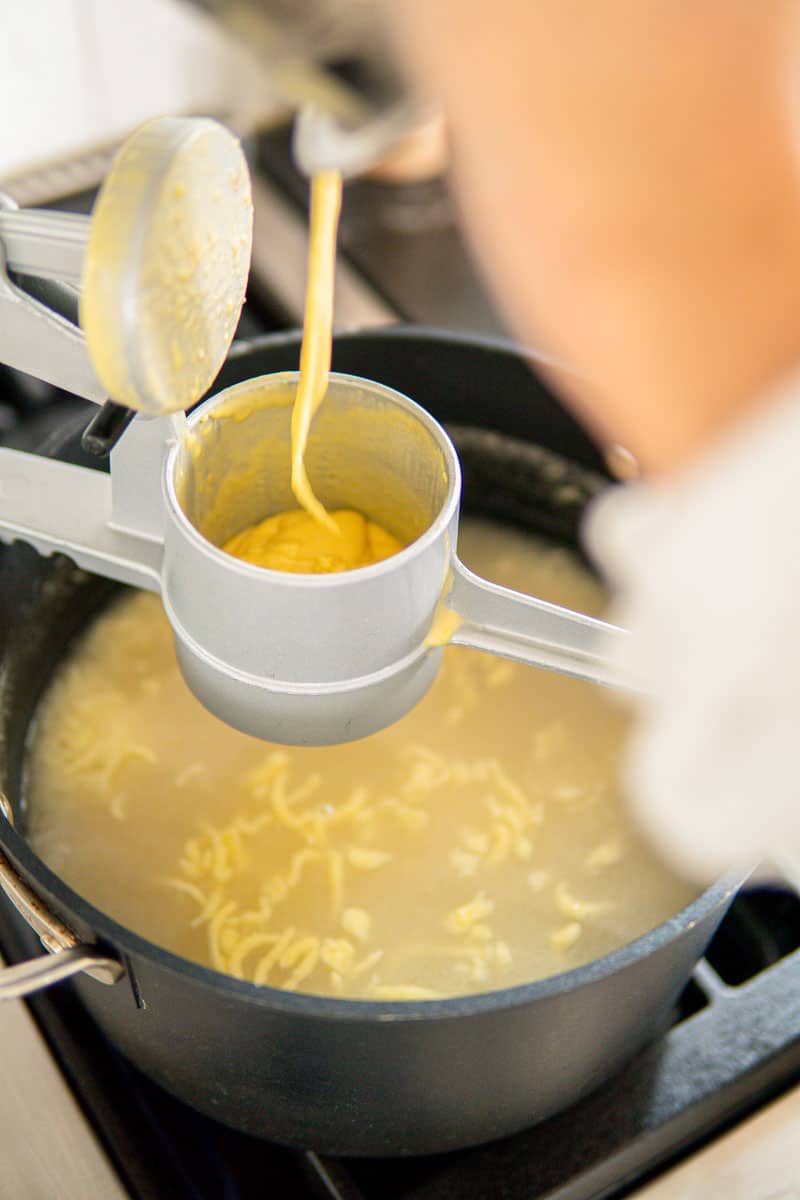
A good spätzle press is a kitchen MVP (most valued product) when you want to make fresh and quick German egg noodles from scratch. Optionally turn your homemade spätzle into käsespätzle layered with cheese and topped with crispy onions. I know. My best tip here is to rinse out the press right after you use it to avoid any batter caking on. A spätzle press is also used to make my favorite German summertime treat: spaghetti ice cream.
- For creamy soups and mashed peas, nothing beats an immersion blender. It blends right in the pot and gives a silky texture without extra cleanup (the blender head goes straight into the dishwasher). Try it in my leek & potato soup.
- And if you're straining, dusting, or rinsing, a fine-mesh sieve or strainer is helpful. You’ll use it for things like Apfelstrudel and Linsensuppe.
Frying and temperature tools
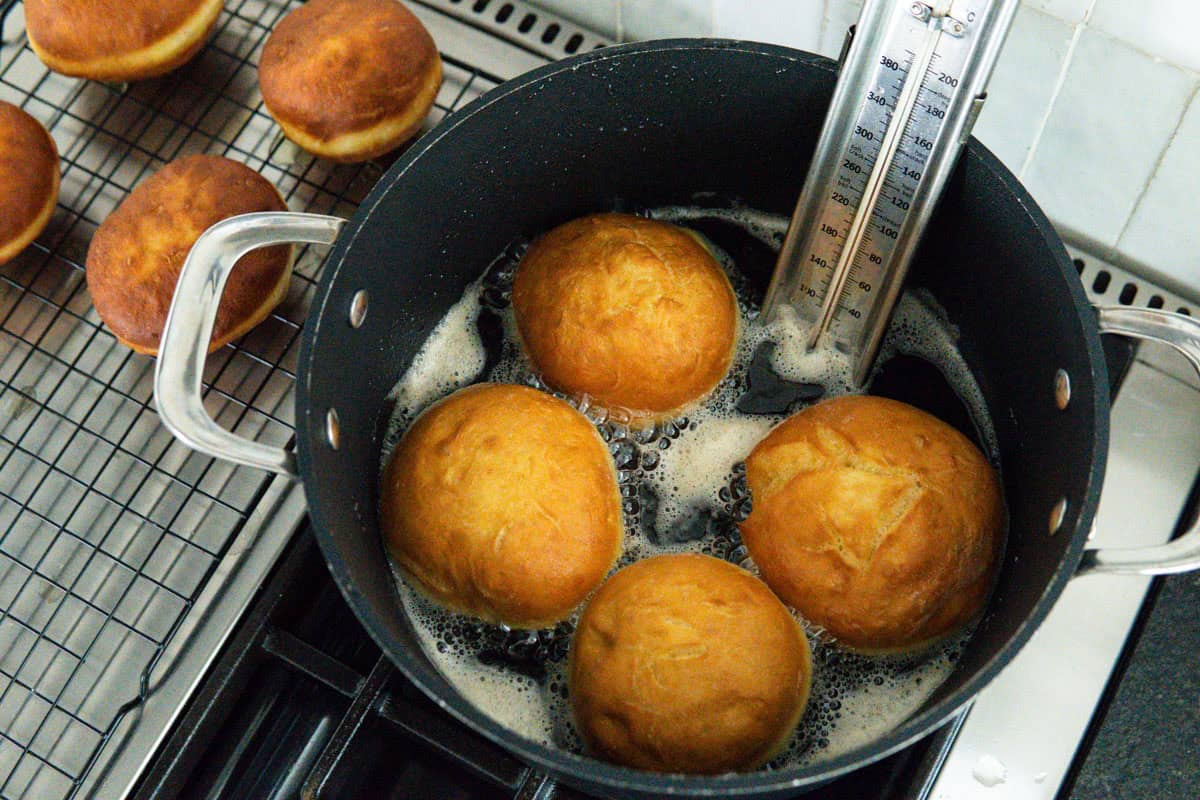
- If you’re making berliner donuts or backfisch, you don't need a deep fryer taking up space! I don't even have one. However, having a frying thermometer is non-negotiable and it easily hides away in your kitchen drawer. It helps you monitor your oil's temperature, so you always end up with the best looking and tasting donuts and fish. Plus, frying thermometers are so cheap!
- This instant-read thermometer is a must for us. It's a bit on the pricier side, but it works instantly and is super well made. Use it to check if your Flieten (fried wings) or Leberkäse is safely cooked. Cheaper options are out there, but I've sadly owned too many cheaper ones that broke.
- A skimmer helps you separate delicate foods like German Potato Dumplings and spätzle noodles and donuts from hot liquids or oil. No skimmer? Grab a slotted spoon, but trust me... the upgrade is worth it! I use mine all the time and it's a must have for making real lye-dipped pretzels.
Small but mighty tools
- For recipes that call for garlic such as my homemade döner, Swiss cheese fondue and sauerbraten, a garlic press is my go-to mincing tool. Of course you can achieve a similar job by finely chopping your garlic (I haven't done that in a long time). However, every modern household in Germany owns a garlic press, and so it helps to remind me of home.
- You’ll also find zest and fresh citrus juice in lots of German glazes and baked goods. That’s where a good zester and citrus press come in. Try them in lemon berliner donuts or stollen. Often box graters have a zester like this one, giving you more tools in one, which I love.
- This breading station set includes 3 shallow, wide dishes that hook into one another. If you're not making schnitzel at home yet, then what are you waiting for?
Seasonal tools
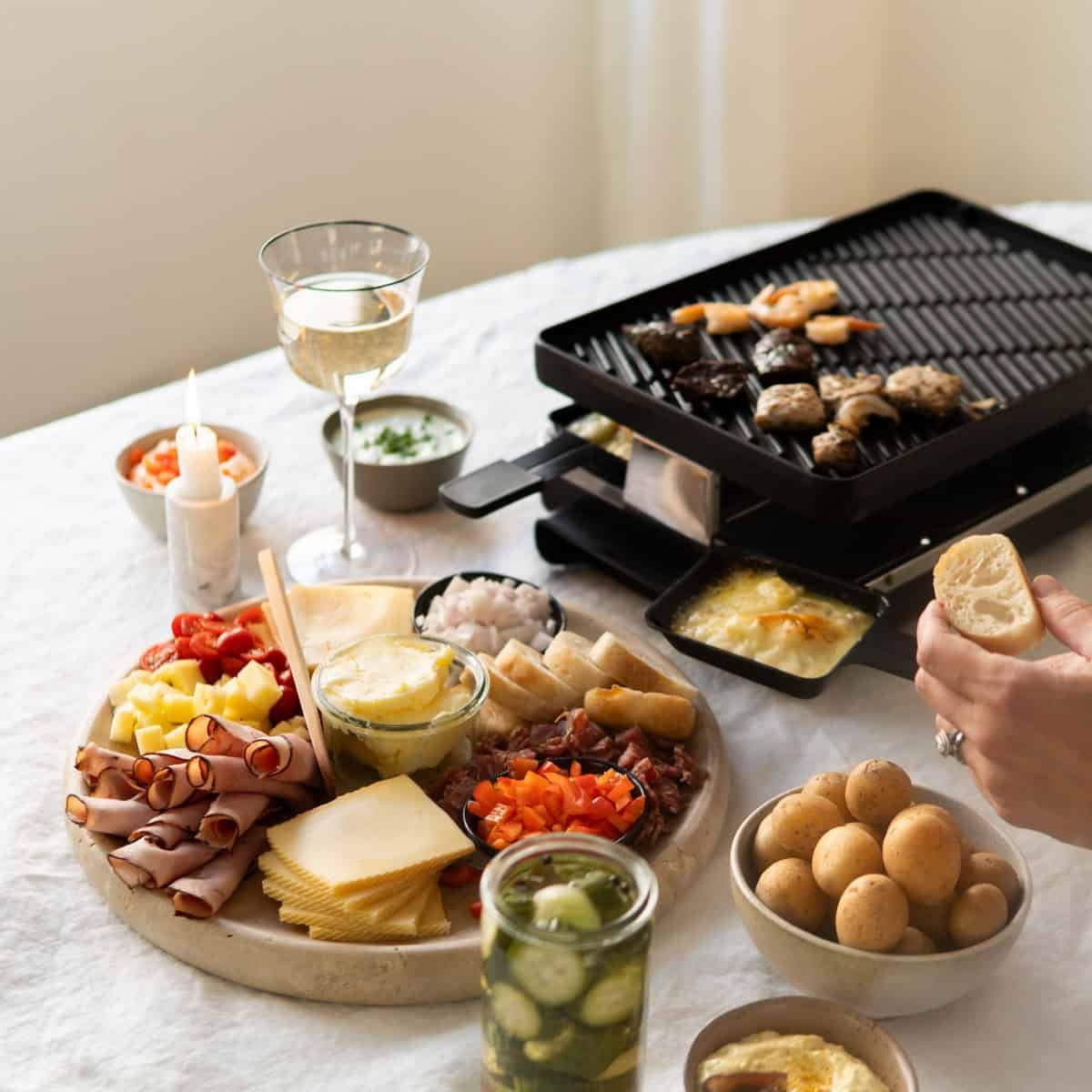
There are exactly two 'winter tools' that help me tremendously to feel closer to Germany. One is a raclette grill and the other a fondue pot.
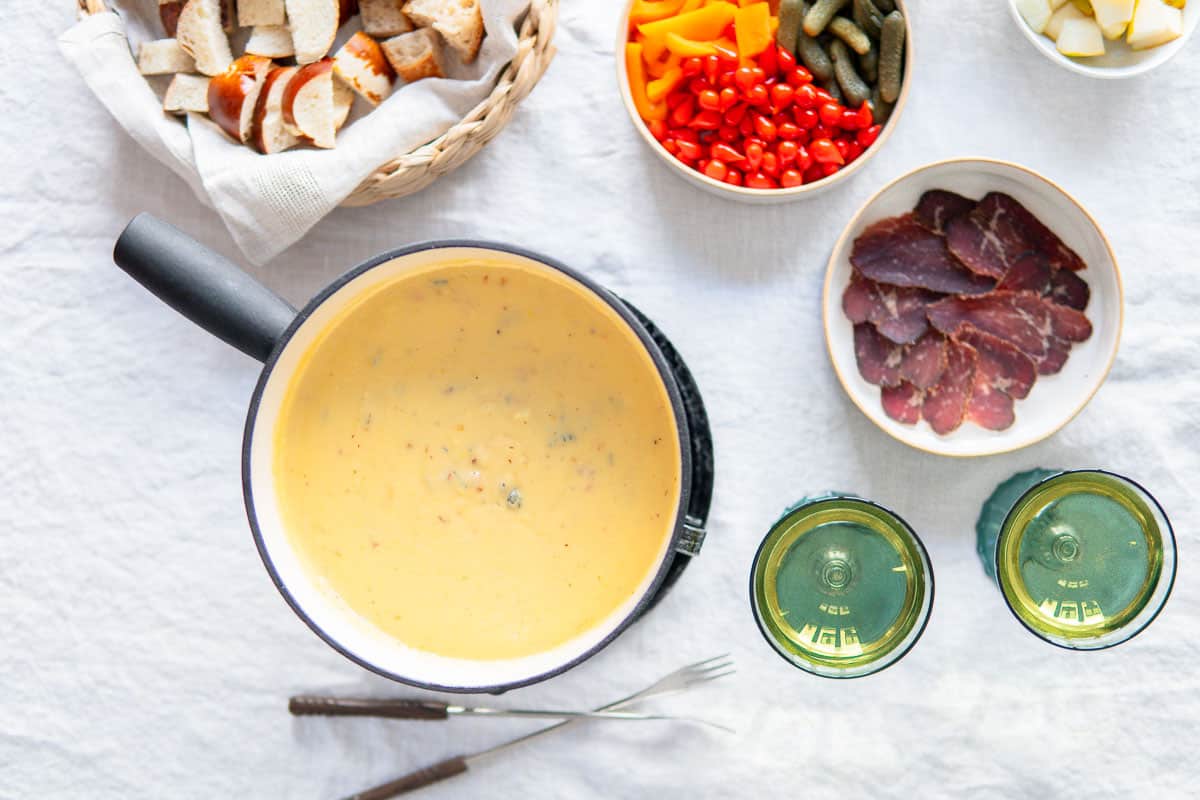
While a fondue pot could be replicated by warming a sauce pan using a tea warmer and a tea light, I have come to really appreciate the experience of using fondue forks to dip in a fondue pot. I have owned so many now and this gorgeous cast iron enameled one is my absolute favorite fondue pot. Then make my Swiss cheese fondue and my beer cheese fondue and host a fondue night.
Raclette is the name of a Swiss cheese and a very specific Swiss meal. While in Switzerland, it's often melted as a chunk of cheese, and then scraped onto plates with potatoes, in Germany, I grew up eating it using a raclette grill. The funnest part about this is that the top is used for cooking meats (if you like), while the pans beneath it melt your cheese.
And this is my favorite raclette grill. The cast iron top works so well in cooking the meats and effectively spreading heat to melt cheese in all of the little pans. I am also teaching you how to raclette in summer, so it doesn't just need to collect dust for the remainder of the year.
One last note
You don’t need every fancy tool to cook German food. Start with what you’ve got, get creative with substitutions, and build your collection over time as you're trying new German recipes like the ones here or from my new bestselling German cookbook 'German Home Kitchen.'
That’s part of the fun. Learning, experimenting, and maybe treating yourself to a spätzle press and bread slicer when you're ready.
If you’re ready to upgrade, shop the links above to support the blog (I earn a small affiliate commission from each purchase). Or just dive into the recipes and get baking and cooking. Either way, your kitchen’s about to smell like Oma's kitchen.

Leave a Reply